Featured
Table of Contents
Signal Forms in Angular 21 change FormGroup pain and ControlValueAccessor complexity with a cleaner, reactive model constructed on signals. Discover what's new in The Replay, LogRocket's newsletter for dev and engineering leaders, in the February 25th issue. Explore how the Universal Commerce Protocol (UCP) permits AI representatives to get in touch with merchants, handle checkout sessions, and safely procedure payments in real-world e-commerce circulations.
This short article checks out six common errors that block streaming, bloat hydration, and produce stale UI in production.
2026 Into Soft Pvt. Ltd. If you want, go Laravel for PHP or Django for Python.
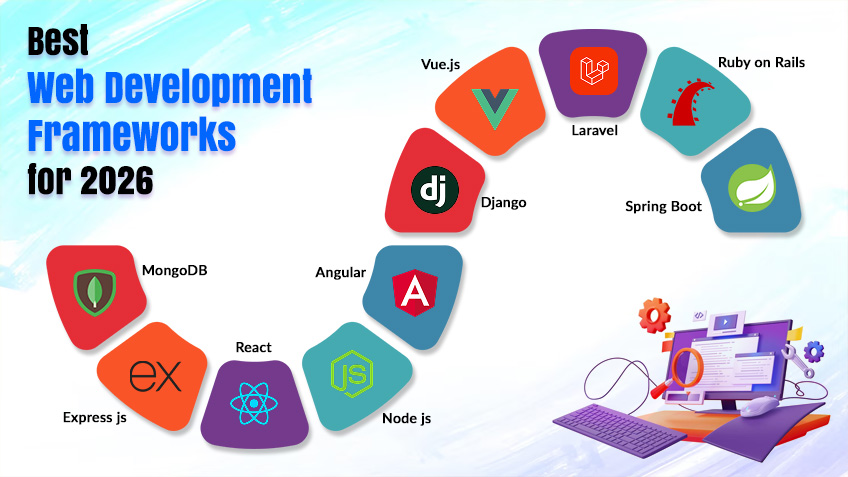
In this guide, we compare the most popular full-stack frameworks in 2026:,,, and. We likewise include, the framework we're building. We think it's an engaging alternative in this space, and we wished to put it side by side with the recognized gamers so you can evaluate for yourself.
How Decoupled Architectures Improve Digital Performance
Beyond the normal requirements like developer experience and community size, we also assess how well each structure plays with AI coding tools like Cursor, Claude Code, Codex, Copilot, and OpenCode since in 2026, that matters especially. We concentrated on five criteria when evaluating full-stack structures: How quickly can you go from init to a released app? Just how much configuration and boilerplate do you (not) need to handle? Are there libraries, plugins, and guides for when you get stuck? Is it being actively maintained? How well does the structure work with AI coding assistants? Can an LLM understand your job structure and generate correct code? Can you deploy with a single command, or do you need to configure infrastructure manually? Does the structure cover the client, server, and database layer, and just how much assembly is needed? All five frameworks in this guide can be utilized for full-stack advancement, however they take various approaches: These are the initial full-stack frameworks.
If your definition of full-stack is "handles everything from HTTP demand to database and back," these frameworks nailed it years earlier. Covers client-side rendering and server-side logic (API routes, server components), but the database layer is completely Bring Your Own (BYO).
Wasp takes a various technique within the JavaScript community particularly. It uses a declarative configuration file that describes your paths, authentication, database designs, server operations, and more in one place. The compiler then creates a React + + Prisma application. Unlike Laravel or Rails, Wasp gets rid of the requirement to pick and assemble frontend options, and packages everything within a single mental design.
Top Front-end Layout Tips for Next-Gen Websites
Laravel has actually been the dominant PHP framework for over a decade, and it reveals no indications of slowing down., Laravel's community is massive and active.
Laravel's consistent conventions and exceptional paperwork mean AI tools can generate fairly precise code. The PHP + JS split (if using Inertia or a React Day spa) implies the AI requires to understand two separate codebases. Rails has around and a devoted, experienced community.
Bed rails' strong conventions make it reasonably predictable for AI tools. Like Laravel, the backend (Ruby) and any contemporary frontend (React through Inertia or API mode) are separate contexts the AI should handle.
With approximately, Django has one of the biggest open-source neighborhoods of any web structure. Python is the language of AI and data science, making Django a natural option for teams that need web applications firmly integrated with ML pipelines.
Enhancing Scalability with API-First Architecture
If your backend does heavy information processing or incorporates with AI designs, Django is a natural fit. Likewise outstanding for government, education, and business contexts where Python is basic. Python is the language AI tools understand best, so Django backend code gets excellent AI help. The detach in between Django's backend and a contemporary JS frontend implies AI tools battle with the full-stack picture.

Latest Posts
Boosting Search Traffic Using Advanced GEO Methods
Data-Driven Methods for Enhancing Content Reach
Creating Modern AI Content Frameworks for Better ROI